Quick Detour To Build Sprytna OKRs
Launching a side project with a friend, we quickly decided to use OKRs (Objectives and Key Results — check out WhatMatters.com if you’re new to the idea). I was happy enough with a shared document, but my friend pushed for something a little more robust. We looked at the existing marketplace of OKR tools and decided it would actually be faster to build our own — even at the cost of development time we didn’t really have to spare.
Most OKR tools are built with way too much complexity, and most of them are miserable to use: long learning curves, half a dozen derived scoring numbers, dashboards that need their own dashboard. We just wanted a tool that did what OKRs are actually for — let us plainly see how we’re tracking toward the objectives we said mattered.
Sprytna OKRs
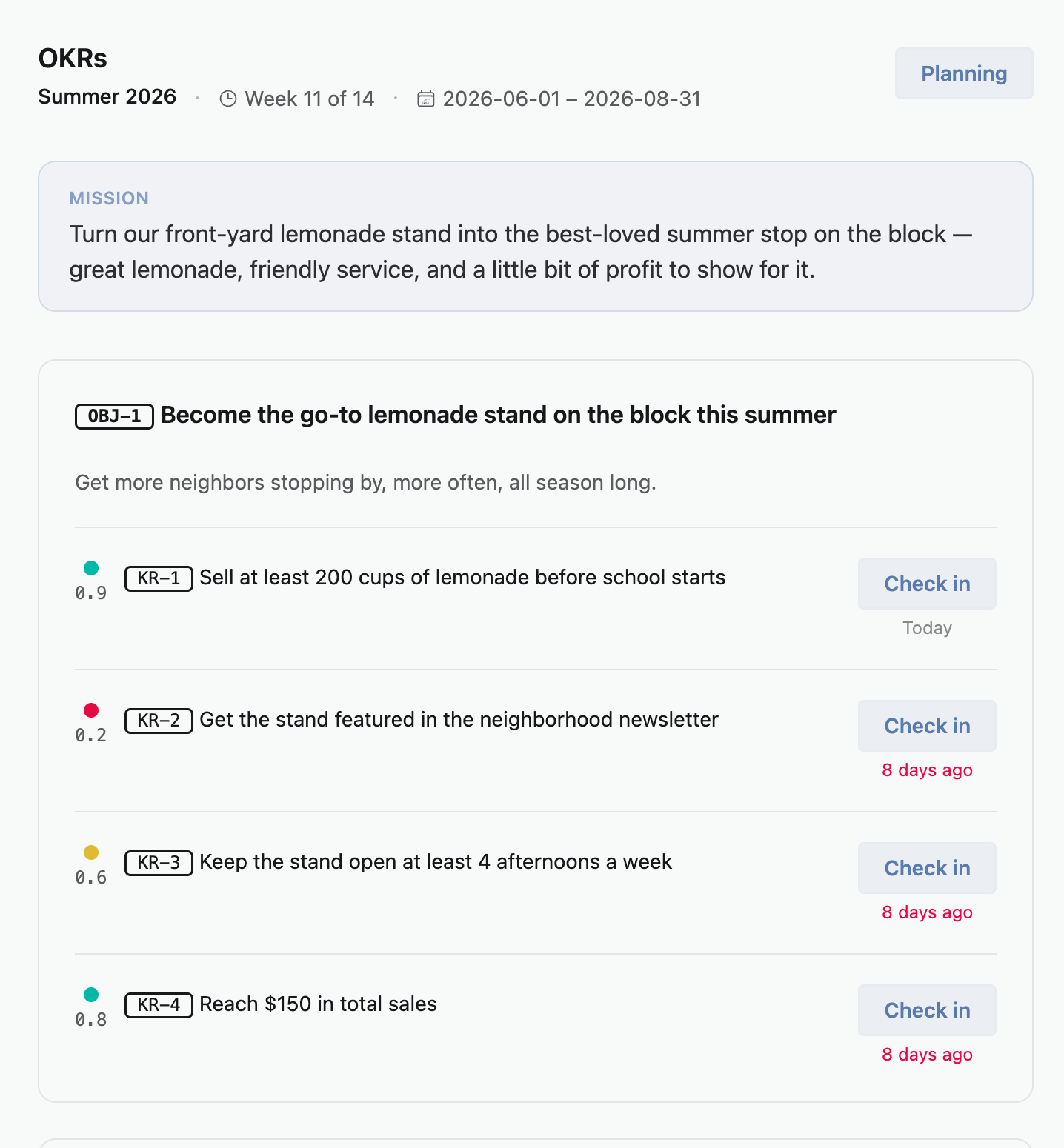
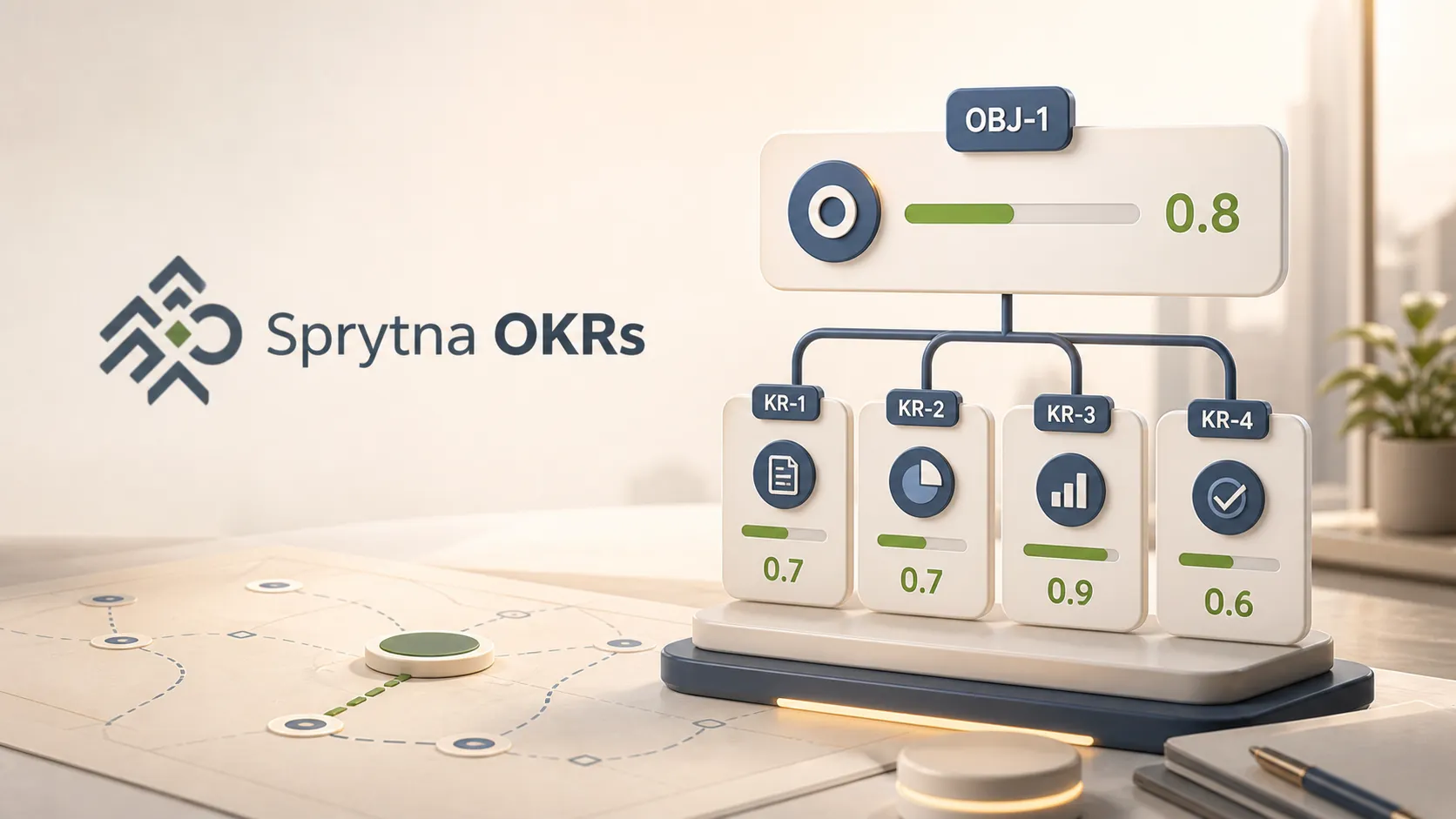
Sprytna OKRs is a small, focused tool: objectives, key results, weekly check-ins, a simple 0–1 score. No start/target/current-value math, no status field to remember to update — the score you give a key result is the color you see. Green, yellow, red, derived automatically.
OKRs aren’t your project management tool. They’re a central place to track the handful of results your company decided to focus on this quarter. We did relent and add a basic task manager, mostly to catch the critical todos that come out of check-in meetings. Otherwise it’s bare bones — which is exactly right for a team our size.
It came together fast, maybe 6 hours of build time. Phoenix and LiveView, deployed to Fly.io, live with real users within a week. We cut anything that didn’t earn its complexity. An early version tracked start/target/current values per key result, Google-style — we threw it out. It didn’t add any real value and just meant entering progress in more than one place.
The nerdy part. The build wasn’t entirely friction-free. Deploying to Fly surfaced a genuinely nasty issue: the connection pooler in front of our Postgres cluster silently hung on both Oban’s job coordination and Ecto’s migration lock. It looked exactly like pool exhaustion until it wasn’t. At this scale, the fix was simply to bypass the pooler.
We didn’t set out to build OKR software
We built this because staying aligned on the real objectives is hard. It helps to have a way to see, every week, whether we’re actually moving toward our objectives or just staying busy — a small communication tool that keeps us both focused on what matters most for the project.
If your team wants the same thing — objectives and key results without the ceremony, simple scoring, check-ins that take thirty seconds — Sprytna OKRs is in private beta now, free while we build out more features. We figure we’ll want cascading OKRs eventually, but at two people, we don’t need that yet.
Join the Sprytna OKRs waitlist →